
Picking a chatbot and picking the model behind a production AI agent are different decisions. They just happen to share the same three names.
GPT vs Claude vs Gemini all pass a casual chat test. Almost nobody tests whether the same model calls a CRM function correctly on request 400. Or holds a JSON schema together across a 12-step workflow. Or survives a rate limit under real traffic.
That gap is why agent projects that look flawless in a demo stall out weeks after launch. This guide scores GPT, Claude, and Gemini on the criteria that actually predict survival in production.
Not which one writes a nicer sentence.
Quick answer: There is no single best LLM for every AI agent. GPT-5.x still has the broadest agent tooling and the deepest custom-GPT marketplace. Claude’s Opus and Sonnet 4.x models lead on tool-calling precision and created the Model Context Protocol most agents now speak natively. Gemini 3.x wins on raw context window and native multimodal ingestion, especially inside Google Workspace. Most production agents in 2026 route tasks across two or three models and keep a fallback, instead of betting everything on one vendor.
Key Takeaways
- Chat quality and agent performance are measured differently. Tool-calling reliability, structured output, and rate limits under load matter more than writing style.
- Anthropic open-sourced the Model Context Protocol in November 2024. By 2025, OpenAI and Google had both added support for it.
- Google’s own Agent2Agent protocol launched in April 2025 and now sits with the Linux Foundation. It lets agents built on different models hand off tasks to each other.
- Gartner forecasts more than 40% of agentic AI projects will be canceled by the end of 2027. A model that doesn’t fit the workload is a common, avoidable reason.
- Enterprise LLM spend research has repeatedly found Anthropic holding the largest share of enterprise API spend since mid-2025, ahead of OpenAI and Google.
- Independent analyses through 2025 and 2026 put the share of enterprises running more than one LLM vendor in production above a third, and climbing.
- Gemini’s context window reaches 2 million tokens on select tiers, the largest of the three. A bigger window does not fix an agent losing track of instructions buried mid-prompt, a pattern researchers call “lost in the middle.”
- The EU AI Act’s Article 50 rule became enforceable on August 2, 2026. It added a compliance layer to LLM vendor selection that barely existed a year earlier.
- Packaged products like ChatGPT Work, Claude Cowork, and Gemini Spark solve a different problem than a custom-built agent. Confusing the two leads teams to buy the wrong thing.
What “AI Agent” Actually Means Here
Search results for GPT vs Claude vs Gemini now split into two unrelated categories. Most comparisons blur them together.

1. Packaged Agent Products: ChatGPT Work, Claude Cowork, Gemini Spark
OpenAI, Anthropic, and Google each ship a consumer-facing “agent mode.” ChatGPT Work, Claude Cowork, and Gemini Spark all control a desktop and browse the web.
They work inside a single subscription plan. That’s genuinely useful for a solo operator automating personal tasks.
It’s also a real limitation:
- Locked to one vendor’s app and integrations.
- Priced per seat, not per outcome.
- Limited to whatever tools that vendor chose to ship.
- Gemini Spark specifically needs a personal Google account, which rules out most managed business accounts.
Businesses that outgrow these limits usually end up talking to a partner like GVM Technologies AI. A locked-in app can’t be pointed at a proprietary database.
2. Custom-Built Agents: What This Guide Actually Covers
A custom-built agent calls the model through its API. Not through a chat app.
It connects to your specific tools, your specific data, and your specific workflow logic. This is the layer where GVM Technologies AI works, and it decides whether an agent scales past a pilot.
If a packaged product already covers your exact use case, take the faster path. If your workflow needs a tool none of the three ship natively, the model-level decision below is the one that matters.
Why Chat Quality Doesn’t Predict Agent Performance
Almost every public comparison answers a consumer question. Which model is nicer to talk to?
That question barely correlates with which model survives inside an unattended workflow.
1. What Changes the Moment a Model Leaves the Chat Window
A chat interface hides almost everything that matters for an agent. The provider handles retries. A human reads the output before anything breaks silently. An agent removes that safety net entirely.
Four things start to matter that a chatbot review never tests:
- Tool-calling reliability.
- Structured output discipline.
- Behavior under rate limits.
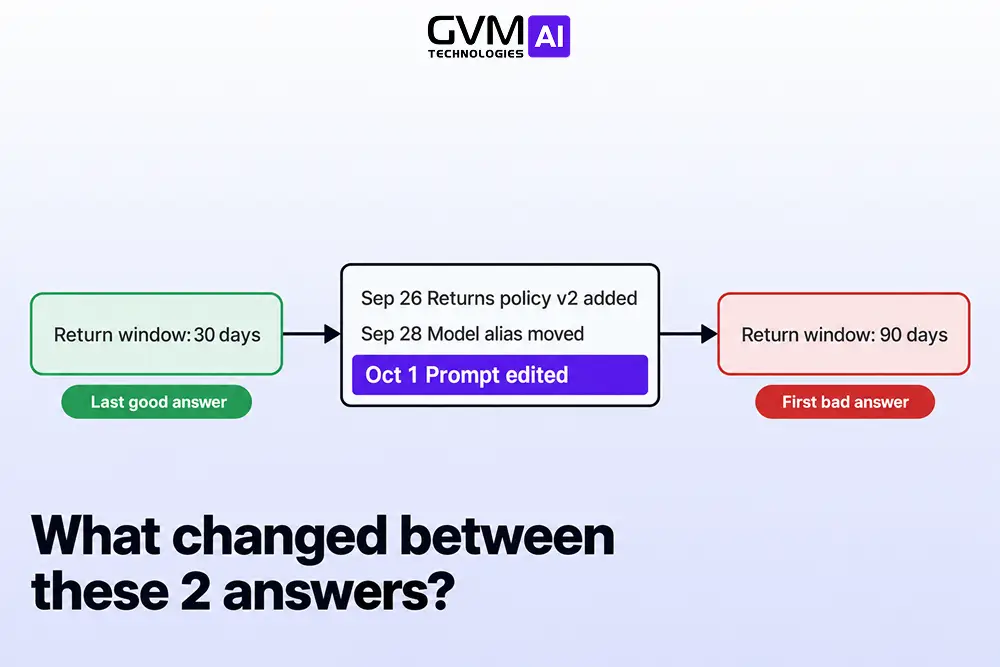
- Consistency across silent version updates.
None of these show up in a “which model writes better” comparison. All four decide whether your AI agent survives real traffic.
2. The Consumer-Subscription Trap Almost Everyone Falls Into
Most public debate about “the best LLM” is actually debating a $20-a-month chat subscription. Not the API tier a production agent runs on.
Rate limits and pricing on a consumer plan have almost nothing to do with your agent’s enterprise API tier. It’s like judging a delivery fleet by test-driving the sales rep’s personal car.
Take Claude’s usage caps specifically. Every complaint you’ve seen online almost certainly describes the Pro or Max chat app.
Anthropic’s consumer plans run on a rolling 5-hour session window that resets on a schedule. API rate limits scale by usage tier instead, a completely separate mechanic.
This exact conflation shows up constantly in client conversations about our core AI solutions. A founder tests a $20 plan personally, then assumes the same ceiling applies to a production build.
It doesn’t. The two run on entirely separate infrastructure.
The Agent-Fit Test: 7 Criteria That Actually Predict Performance
Score a foundation model on these seven dimensions before scoring it on anything a chatbot review measures.

- Tool-calling maturity. How reliably it selects the correct function and formats arguments across a long session.
- Native agent protocol support. Whether it speaks MCP, A2A, or another standard your tools already use.
- Structured output consistency. Whether it holds a schema together on call 400 the same way it did on call 1.
- Context window versus attention quality. Not just token capacity, but how well the model uses information placed mid-prompt.
- Cost per completed task, not cost per token. A cheaper model needing three retries isn’t actually cheaper.
- Rate limits at API scale, not the consumer app tier.
- Version stability. How often the provider silently changes behavior, and how much warning you get.
This is the same checklist we run in our resource library for every client engagement.
Most public comparisons score writing quality, general knowledge, and leaderboard rank instead. Those barely appear here on purpose.
A model can top a benchmark and still fail an agent. Especially one that needs criterion 1, 2, or 7 more than raw intelligence.
GPT vs. Claude vs. Gemini: The Agent-Fit Scorecard
1. Scoring the Three Against the Seven Criteria
| Criterion | GPT-5.x | Claude Opus / Sonnet 4.x | Gemini 3.x Pro |
|---|---|---|---|
| Tool-calling maturity | Strongest ecosystem breadth, Agents SDK and Codex | Strongest single-call reliability and precision | Improving fast, still least consistent |
| Native protocol support | Added MCP support in 2025, own Agents SDK | Created and open-sourced MCP, deepest support | Supports MCP, created its own A2A protocol |
| Structured output | Strong, occasional drift on very long sessions | Highest consistency across multi-step tasks | Solid short tasks, weaker on long workflows |
| Context window | Smallest of the three at typical configs | 200K tokens standard, 1M in beta on select tiers | 1M standard, up to 2M on select tiers |
| Cost positioning | Mid-to-premium, generous mini tier for scale | Premium at frontier tier, competitive at Sonnet/Haiku | Cheapest at Flash tier, competitive at Pro |
| Rate limits at scale | Generous, well-documented scaling tiers | Historically tightest, improving with usage plans | Generous, backed by Google Cloud |
| Best-fit agent type | General-purpose, high tool-call volume | Coding, complex reasoning, regulated work | Document-heavy, Workspace-native, multimodal |
2. What This Table Misses
The row every guide skips is tier mismatch. A team benchmarks Claude’s flagship Opus against GPT’s mid tier, then concludes Claude wins.
They compared a frontier model to a workhorse model. That’s not a fair fight.
The fairer test runs tier-to-tier:
- Opus against GPT’s top reasoning tier.
- Sonnet against GPT’s mid tier.
- Haiku against Gemini Flash or GPT-mini.
Skip that step, and any “best model” conclusion only applies to the specific pricing tier tested. This is exactly the tier-mismatch error GVM Technologies AI corrects for before recommending a model.
3. Version Drift: The Risk Every Comparison Skips
All three providers have quietly changed model behavior after a named release. Sometimes trading a little accuracy for speed. Sometimes the reverse.
An agent that passed every test in one month can behave differently the next. With zero code changes on your end.
Practitioners running agentic coding workloads have described a specific named version feeling noticeably weaker than the one it replaced. Inside the same model family, with no warning.
Pin your model version explicitly in production.
Treat “latest” as a staging-only setting, never a production default. Our AI agent readiness checklist asks teams to confirm this before launch.
Ecosystem, Hosting, and Multimodal Reach
Tool-calling and context window get most of the attention. Ecosystem depth and hosting options decide how much custom engineering your team writes around the model.
1. Marketplace, Connectors, and Native Integrations
| Layer | GPT-5.x | Claude Opus / Sonnet 4.x | Gemini 3.x Pro |
|---|---|---|---|
| Marketplace | Most mature custom-GPT and Assistants ecosystem | Strong third-party connectors, Artifacts for previews | Native inside Gmail, Docs, Sheets, and Drive |
| Multimodal ingestion | Strong image and voice, growing video | Strong document and code reasoning, image input | Strongest native audio, video, large-codebase |
| Enterprise hosting | Azure OpenAI Service | AWS Bedrock, Google Cloud Vertex AI | Native on Google Cloud Vertex AI |
| Data residency | Regional endpoints via Azure | Regional options via Bedrock and Vertex | Strongest, backed directly by Google Cloud |
2. Why Hosting Choice Changes the Real Answer
A business already committed to AWS or Azure often gets a better answer from whichever model is natively hosted there. Regardless of which one wins a feature scorecard.
Claude’s availability on both Bedrock and Vertex makes it the most portable across major clouds. GPT’s tightest enterprise hosting path currently runs through Azure specifically.
Healthcare, finance, and other regulated verticals weigh this hosting question more heavily than a raw scorecard. Our specialized industry AI solutions cover this in more depth.
Where Each Model Actually Wins
1. GPT-5.x: The Generalist With the Deepest Tooling Ecosystem
GPT’s real advantage isn’t raw intelligence. It’s breadth.
OpenAI has built more agent-specific tooling than either competitor:
- A dedicated Agents SDK.
- A Responses API built for multi-step tool use.
- Codex for coding agents specifically.
If your team is shipping its first production agent, GPT is the path of least resistance. It has the widest range of integrations and community troubleshooting available.
Our AI agent versus no-code automation guide covers this same territory in more depth.
The trade-off shows up at the extremes. On the hardest multi-step reasoning tasks, GPT-5.x’s mid tier can drift under long-horizon pressure, the way any generalist model does.
2. Claude Opus and Sonnet 4.x: Built by the Team That Invented the Protocol
Anthropic didn’t just build a strong model. It built the connective tissue most agents now use to talk to tools.
MCP came from Anthropic first. Claude’s first-party support for it is the most mature of the three.
Claude also shows up disproportionately often behind coding agents specifically. Cursor and Replit both built their flagship agentic coding products around Claude by default.
That’s a strong signal. Their entire product depends on getting multi-step tool-calling right.
The honest trade-off is cost and rate limits at the frontier tier. Opus is priced at a premium, and Anthropic’s API limits have historically been the tightest of the three at comparable tiers.
Sonnet and Haiku close most of that gap at a fraction of the cost.
3. Gemini 3.x: The Context and Multimodal Specialist
Gemini’s headline advantage is real. A 1-million-token context window as standard, expandable further, dwarfs both competitors.
That matters for reasoning across an entire codebase in one pass. Or a full legal contract. Or hours of meeting transcripts.
Pair that with native audio and video ingestion. Add direct embedding inside Gmail, Docs, Sheets, and Drive.
A Workspace-standardized business gets connectivity the other two can’t replicate without middleware.
The catch is attention quality, not window size. A 1-million-token window doesn’t mean the model weighs every token equally.
Tool-calling and structured-output consistency have also been the least predictable of the three in practitioner reports. The gap narrows with each release, but it hasn’t closed yet.
What Failure Actually Looks Like With Each Model
Every model fails differently. Knowing the shape of that failure in advance saves debugging time once an agent is live.
Our breakdown of why AI agents hallucinate in production covers the input, grounding, action, and output points behind all three patterns below.

1. How a GPT-Powered Agent Tends to Fail
- GPT-based agents most often fail by taking a shortcut. Usually on a long, multi-step task, after several successful iterations in a row.
- The failure looks like confident completion of a task that was actually done incorrectly.
- That confidence is what makes it hard to catch.
- Build an explicit verification step into the workflow. Don’t trust a clean-looking output alone.
2. How a Claude-Powered Agent Tends to Fail
- Claude-based agents more often fail by being too cautious.
- Refusing or hedging on a legitimate request that sits near a safety boundary.
- That failure mode is easier to catch.
- The agent usually surfaces its hesitation instead of silently producing a wrong answer.
- It costs completion rate, not correctness.
- A meaningful difference when you’re triaging production incidents.
3. How a Gemini-Powered Agent Tends to Fail
- Gemini-based agents most often fail on very long sessions.
- They lose track of an instruction given early in the conversation.
- This happens despite the large context window technically holding that instruction.
- The failure shows up as the agent forgetting a constraint set several turns earlier.
- Test for this specifically before trusting Gemini with a long-running, multi-turn workflow.
The Decision Tree: Matching a Model to Your Actual Use Case
Skip the “which is smartest” debate. Start from the job the agent needs to do.

| Your Agent’s Primary Job | Recommended Primary Model | Why | Reasonable Fallback |
|---|---|---|---|
| Customer-facing support, high volume | GPT-5.x or Claude Sonnet 4.x | Mature tooling, strong rate limits, proven at scale | The other, routed by cost |
| Coding or dev agent | Claude Opus/Sonnet 4.x | Strongest multi-step code reasoning, native MCP | GPT-5.x Codex tier |
| Internal document or knowledge-base agent | Gemini 3.x Pro | Largest window, native Workspace integration | Claude with a RAG layer for the rest |
| Regulated industry, compliance-heavy agent | Claude Opus 4.x | Highest structured-output consistency for audits | GPT-5.x with stricter guardrails |
| Sales or research agent needing current data | GPT-5.x or Gemini 3.x | Strongest native search and retrieval | The other, paired with a RAG pipeline |
| High-volume, low-complexity extraction | Cheapest same-tier model across all three | Doesn’t need frontier reasoning | Whichever hits your latency target |
None of these rows match your situation? Run the Agent-Fit Test above instead of defaulting to whichever model is trending that week.
The “regulated, compliance-heavy” row deserves one more read alongside our shadow AI governance guide. An ungoverned agent creates the same audit risk no matter which model sits behind it.
The Stack-Don’t-Settle Principle
The most consistent pattern among teams shipping real production agents isn’t a universal winner. It’s refusal to lock into one vendor for everything.
1. Routing by Task: The Pattern Every Mature Team Converges On
Klarna’s OpenAI-built support agent handled roughly 2.3 million conversations in its first month. Cursor and Replit picked Claude for coding agents instead. The workload decided it, not general quality.
A common production pattern looks like this:
- Claude handles heavy reasoning and coding.
- Gemini handles long-document processing.
- GPT handles broad generalist and retrieval tasks.
Three specialists working one pipeline, instead of one generalist doing everything. Intercom’s Fin, one of the most widely deployed customer-service agents, doesn’t lock into a single model either.
Perplexity goes further. It lets the end user choose the underlying model per query.
2. The Cross-Model Review Loop: A Second Model as Quality Control
Here’s a pattern rarely written about outside practitioner circles. Use a second model to review the first model’s output before it ships.

Inside the same agent pipeline. Not just as a fallback. One model drafts a plan or a piece of output. A second model, from a different provider, checks it for contradictions or missing edge cases before the agent commits to the action.
This catches a specific class of error neither model catches alone. A confident, well-formatted answer that’s simply wrong.
It costs one extra API call. It often prevents the kind of failure that only surfaces once a human notices it downstream.
This is also the strongest hedge against version drift and rate-limit risk covered earlier. Vendor lock-in on a single provider is a real business risk.
A cheap fallback model removes that risk for very little added cost.
If your architecture already coordinates multiple components, our guide on single-agent versus multi-agent systems covers when that added complexity earns its keep.
Cost, Latency, and the Math a Sticker Price Won’t Show You
| Factor | Single-model pilot | Multi-model production stack |
|---|---|---|
| Timeline | 1 to 3 weeks | 4 to 10 weeks, including fallback routing |
| Effort goes to | Prompt design, tool schemas, a 20-50 case evaluation set | Orchestration logic, cost-based routing, output validation |
| Ongoing cost driver | Per-token API cost at real call volume | Blended per-task cost, plus drift monitoring |
| Smallest team | 1 engineer with API access | 1-2 engineers, plus someone owning the cost tradeoff |
1. Cost Per Completed Task, Not Cost Per Token
A model priced 40% cheaper per token can still cost more overall. If it fails a tool call 1 time in 5, retries eat the savings.
Score a pilot on completed-task cost. Never trust the number on a pricing page alone.
2. Why Per-Token Pricing Tables Go Stale Within Weeks
Every provider has adjusted per-token pricing multiple times in the past year. A specific dollar figure quoted in any comparison article, including this one, risks going stale fast.
Verify current pricing directly with each provider before budgeting. Treat relative positioning, premium versus mid-tier versus budget, as the durable signal instead.
Compliance, Data Residency, and the Angle Most Comparisons Skip
Choosing an LLM for a data-touching enterprise AI agent isn’t purely technical anymore. The EU AI Act’s Article 50 rule became enforceable on August 2, 2026.
It requires clear disclosure when a user interacts with an AI system.
Questions worth asking before you commit to a vendor:
- Does the provider guarantee your data isn’t used for model training by default on your tier?
- What data residency options exist if your industry or region requires them?
- Is there a dedicated enterprise tier with stricter audit logging?
- How does the provider handle a security incident disclosure, and what SLA backs it?
If your agent will ever touch customer records, our guide on giving an AI agent access to customer data covers the access-control side. It applies regardless of which model ends up behind the agent.
Mistakes Businesses Make When Picking an LLM for an AI Agent
- Benchmarking chat quality instead of task completion. A model that writes beautifully in a demo and fails tool calls in production solves the wrong problem.
- Comparing a flagship tier against a mid tier. Opus against a budget model isn’t a fair test of “which provider is better.”
- Treating consumer subscription limits as API rate limits. They’re unrelated numbers, and confusing them sizes an agent around a $20 plan’s constraints.
- Assuming a bigger context window solves a reasoning problem. It solves a retrieval problem. Instructions still get lost mid-prompt regardless of window size.
- Building with no fallback model. A single point of failure on one provider’s uptime is a business risk that costs almost nothing to hedge.
- Skipping an evaluation set of real failures. Picking a model off a leaderboard, without testing your agent’s actual worst cases, routinely produces the wrong answer.
- Ignoring version drift. Deploying against “latest” instead of pinning a version means behavior can shift with zero code changes.
Whether this evaluation happens in-house or with an outside partner, it belongs before a build gets scoped. Not after the agent is already underperforming.
Why GVM Technologies AI Runs This Evaluation Differently
Most comparison content, and most vendor conversations, lead with a favorite model. Then work backward to justify it.
1. The Workload-First Process
As an AI automation agency, GVM Technologies AI starts from the Agent-Fit Test run against your actual workload. Not a generic leaderboard.
Recommending Claude for a task that needs GPT’s broader tooling wastes budget solving the problem the wrong way.
Recommending a single-model build for a workload that clearly needs a fallback leaves a business risk nobody flagged.
2. What You Get Before Any Build Starts
- A scored evaluation of GPT, Claude, and Gemini against your specific tools, data shapes, and expected volume, using your worst-case tasks.
- An honest cost-per-completed-task estimate, not a per-token sticker price.
- A fallback and version-pinning plan built in from day one, not bolted on after an outage.
Ready to Find Out Which LLM Actually Fits Your Agent?
Bring us the workflow you’re trying to automate. Include 10 to 20 examples of the task the agent needs to handle correctly, every time.
We’ll run it through the Agent-Fit Test against GPT, Claude, and Gemini using your real cases. Not a generic benchmark.
We’ll tell you honestly which model, or which combination, actually fits, before you commit a budget to one.
Talk to our team at GVM Technologies AI for a straight read on which LLM your specific agent needs.
Haven’t validated whether your business is ready to build an agent at all? Our AI agent readiness checklist is the step before this one.
FAQs
1. What’s the actual difference between choosing an LLM for a chatbot and choosing one for an AI agent?
A chatbot’s quality is judged by how good its responses read to a human in the loop. An agent’s quality is judged by whether it calls the right tools correctly and stays reliable at production volume, without a human checking every response.
2. Which LLM is best for AI agents in 2026?
There’s no single universal answer. GPT-5.x has the broadest tooling for general-purpose agents. Claude’s Opus and Sonnet 4.x lead on coding agents and native MCP support. Gemini 3.x wins on context window and Workspace-native agents. Match the model to the workload using the Agent-Fit Test above.
3. Is Gemini’s huge context window actually an advantage for AI agents?
For agents reasoning across a very long document in a single pass, yes. For agents doing careful multi-step reasoning where instructions sit mid-prompt, a larger window doesn’t guarantee better attention to those instructions. Window size and reasoning reliability are separate properties.
4. Which LLM is cheapest to run a business AI agent on?
At the lightweight tier, Gemini Flash is typically the cheapest per token, with GPT’s mini tiers close behind. Cost per completed task matters more than the per-token number, since a cheaper model needing retries can cost more in practice.
5. Do I have to pick just one LLM for my AI agent?
No, and increasingly, mature production agents don’t. Most businesses running agents at scale pick a primary model per workload and keep a fallback, sometimes routing different steps of the same coordinated agent to different models.
6. Which LLM is best for coding agents specifically?
Claude’s Opus and Sonnet 4.x models are the most common default for agentic coding products, including Cursor and Replit, largely due to stronger multi-step code reasoning and native MCP support. GPT-5.x’s Codex tier is a strong alternative inside OpenAI’s own ecosystem.
7. Which LLM is most reliable for regulated industries or sensitive customer data?
All three offer enterprise tiers with stricter data handling terms. Those terms change frequently and need verifying directly with the provider.
Claude has generally led on structured-output consistency, which matters for auditability. Score compliance posture separately from model capability, never as a side effect.
8. Can I switch LLMs later without rebuilding my AI agent?
It depends on the architecture. An agent built around a model-agnostic orchestration layer, with tool definitions decoupled from any one provider’s API, can usually swap models with moderate rework. An agent built tightly around one provider’s proprietary features is far more expensive to migrate.
9. Should I compare ChatGPT Work, Claude Cowork, and Gemini Spark instead of the raw models?
Only if a packaged consumer product genuinely fits your use case as-is. Those products are locked to one vendor’s app, closer in spirit to our business automation solutions than to a ground-up build.
A custom-built agent gives you the flexibility to route across models. And to connect tools none of the three ship natively.
The Bottom Line
GPT vs. Claude vs. Gemini isn’t a contest with one permanent winner. Treating it like one is how agents get rebuilt months after launch.
GPT offers the broadest tooling ecosystem. Claude offers the most mature tool-calling and the protocol most agents already speak. Gemini offers the largest context window and the deepest multimodal integration.
Score your actual workload against the Agent-Fit Test before scoring any model against a leaderboard. Most production agents in 2026 pick a primary model that fits the job, then keep a fallback.
That way, one provider’s next outage or quiet model update never becomes your business’s 2 a.m. problem.